Working in family law means that your primary focus will be to resolve relationship issues that emerge in a family context.
The duties of a family law lawyer includes working on varied cases involving practical areas such as divorce.
However, although people often think of family law in the context of divorce, it is not limited to the dissolution of marriage.
Family lawyers can consider a variety of additional factors that involve family relationships or family issues, such as adoptions, child welfare, domestic violence, minor legal issues. The purpose of this glossary is to provide knowledge on this subject. Also, it can show how to use and pronounce specific terms that are used in that field of study. In fact, those words might not be familiar to everyone.
alimony
noun
A regular amount of money that a court of law orders a person to pay to their previous wife or husband after a divorce.
Example: The husband would be forced to pay his wife alimony for the rest of his life.
fr: pension
bribery
noun
The crime of giving someone money or something else of value, often illegally, to persuade that person to do something you want.
Example: Members of the police were frequently involved or complicit in armed robberies, and often released criminals in response to bribery or political pressure.
fr: corruption
burglary
noun
Entry into a building illegally with intent to commit a crime, especially theft.
Example: The tenants also suffered from a mysterious burglary where nothing was taken but a terrible mess was made.
fr: cambriolage
commute
verb
To replace a punishment with a less severe one.
Example: Her sentence was commuted from death to life imprisonment.
fr: atténuer la peine
courtroom
noun
A usually large room where trials and other legal cases happen.
Example: Back in the courtroom, the coroner addressed the jury about the purpose of the proceedings.
fr: salle d'audience
culprit
noun
A person who is responsible for a crime or other misdeed.
Example: The police caught the culprit within a few hours.
fr: coupable
dissent
verb
To offer a legal opinion (of a judge) in a court that differs from the opinion of most of the other judges of the court.
Example: A staunch conservative, he frequently dissented from the court’s majority opinion.
fr: différer
evidence
noun
Objects, documents, official statements, etc. that are used to prove something is true or not true, especially for legal or insurance purposes.
Example: The defendant was released after the prosecutor failed to produce enough evidence against him.
fr: preuve
felony
noun
A crime, typically one involving violence, regarded as more serious than a misdemeanor, and usually punishable by imprisonment for more than one year or by death.
Example: He was arrested on suspicion of planning to commit a felony.
fr: crime
fine
noun
An amount of money that has to be paid as a punishment for not obeying a rule or law.
Example: The judge said that the fine would serve as a warning to other motorists who drove without due care.
fr: amende
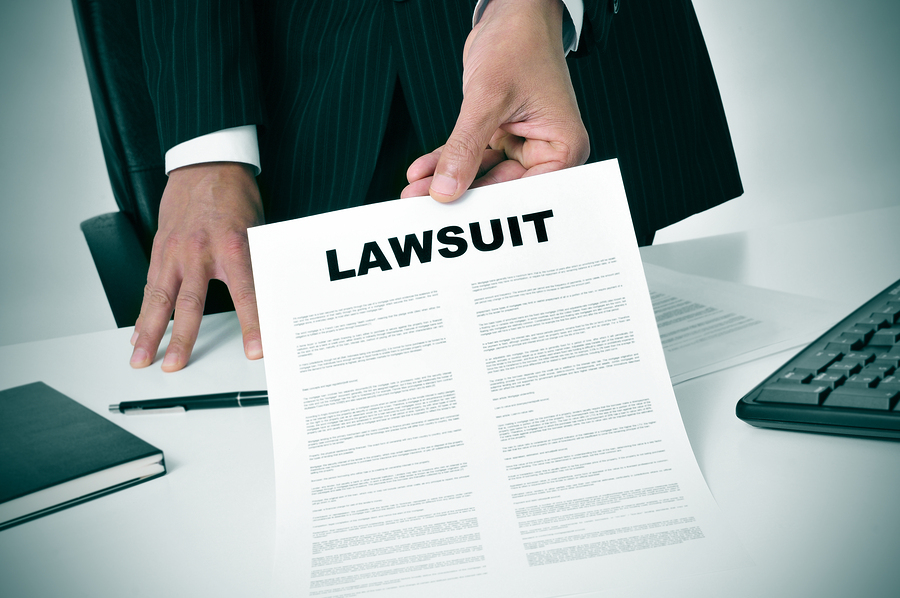
lawsuit
noun
A claim or dispute brought to a court of law for adjudication.
Example: Consider recent research on medical procedures which are relatively insulated from lawsuits.
fr: poursuite
misdemeanor
noun
Any minor offense, as the breaking of a municipal ordinance, for which statute provides a lesser punishment than for a felony. The penalty is usually a fine or imprisonment for a short time.
Example: The offence that is punished according to law by a correctional penalty is a misdemeanor.
fr: délit
negligence
noun
Failure to give enough care or attention to someone or something that you are responsible for.
Example: The company was sued for gross negligence after the death of the two employees.
fr: négligence
oath
noun
A promise, especially that you will tell the truth in a law court.
Example: The judge reminded the witness that she was under oath.
fr: serment
perjury
noun
The offense of willfully telling an untruth in a court after having taken an oath or affirmation.
Example: It emerged from questioning that he had been previously sentenced to six months' imprisonment for perjury.
fr: faux témoignage
plead
verb
To make a statement of what you believe to be true, especially in support of something or someone or when someone has been accused in a law court.
Example: He pleaded guilty for being present though not for breaking the machine.
fr: plaider
testimony
noun
A formal statement about something, especially one given in a court of law.
Example: The value of their testimony is questionable.
fr: témoignage
verdict
noun
An opinion or decision made after judging the facts that are given, especially one made at the end of a trial.
Example: Whenever a disagreement arose, a third observer designated by consensus by the working group issued the final verdict.
fr: verdict
warrant
noun
An official document, signed by a judge or other person in authority, that gives the police permission to search someone's home, arrest a person, or take some other action.
Example: The police issued a warrant for his arrest.
fr: mandat
witness
noun
A person who sees an event, typically a crime or accident, take place.
Example: The defence attacks the second witness claim by pointing out the corroborative evidence that the witness is biased.



/GettyImages-453568557-56b6a6133df78c0b135b1c3a.jpg)